One of the most common criticisms of Chinese Medicine is often a criticism of the vernacular used by Traditional Chinese doctors when discussing their concepts. For a Western mind, concepts like Qi, Essence, or even patterns like Damp Heat are remnants of an age where people thought the Sun was eaten by a monster every night and thus shouldn’t be taken seriously.
But this claim is flawed in its premise because it presupposes a Western methodology to analyze Chinese medical vocabulary.
Oranges and Apples.
Even though research papers and clinical evidence are backing the claims of Chinese Medicine, people are still reluctant to accept it because it doesn’t sound ‘scientific’, aka, it doesn’t use Greek or Latin for their terms.
There have been attempts at trying to ‘Westernize’ Chinese Medicine or its terms, but it always ends up with something that isn’t Chinese Medicine. As a product of its own culture, Chinese Medicine must be understood within such context and be judged based on whether the results are there or not.
But what if I told you that that same ‘ancient and non-scientific’ language helped an author deal with an illness of our day?
Let’s dive into it:
Table of Contents
Why is Chinese Medical Language Criticized
Chinese Medicine developed within the shared culture and tradition of the Chinese people, dating back almost 5000 years, and its concepts are a reflection and application of their thinking. Being Philosophy, the mother of all sciences, Chinese Medicine was heavily shaped and influenced by the different philosophical schools in ancient China.
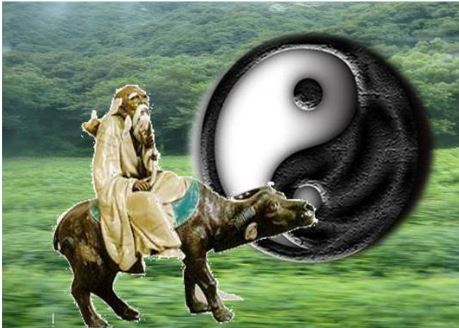
Image: Artistic depiction of Lao Zi and the Taijitu
One core characteristic of the language used in both Chinese philosophy and Medicine is the use of terms and concepts related to nature and metaphysics. Some examples are the Pathogenic Factors in Chinese Medicine: Wind, Heat, Dampness, Dryness, Cold, and Summer Heat.
For most people, the use of these terms to refer to health issues and medical theory leads to two main claims against Chinese Medicine:
1. Claims of unscientific
Perhaps the most common claim against Chinese Medicine, albeit dismissed by the evidence, almost no institution’s talking head refuses to accept. These claims rely on using Western science’s methodology to analyze a foreign system.
Countless people think of Chinese Medicine as woo-woo because there isn’t a substance that can be defined as Qi, or Essence, or Shen. But this is a wrong accusation because nowhere in the Chinese Medical literature are those things thought of as tangible entities, but rather as concepts involving many variables.
You won’t find Qi under a microscope, and that’s fine.
Another key fact here is the overemphasis on the metaphysical side, which is usually abused by those who aren’t that well-versed in Chinese Medicine or think it’s all energy. Martial arts movies and the overall portrayal of Chinese culture make people think that, too, to be fair.
Which leads us to the next claim:
2. Unspecific
Another claim that is used to dismiss Chinese Medical language is that it’s unspecific, but again, this is also based on a Western approach to an Eastern methodology. The technical language used in the West can’t be applied the same way to Chinese Medicine.
In Chinese Medicine, there isn’t a direct one-to-one correspondence between concept and substance/aspect.
So you will find yourself noting that one concept in Chinese Medicine includes two or three different concepts from Western medicine or science.
For example, Qi means air in Chinese, but in the context of Chinese Medicine, it can mean a lot of different things. Qi can refer to the Oxygen you breathe in (called the Air Qi) as well as the nutritive essence or nutrients drawn from food (Known as Food Qi or grain Qi) but also in some respect to the Immune System (Wei Qi or Defensive Qi), and even to the functional integrity and functioning of an organ (Organ Qi).
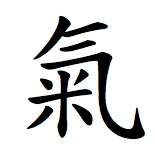
What’s more, the only way to make sense of Chinese Medicine is by respecting the use of their terminology and concepts and not trying to ‘Westernize’ it; otherwise, you will undo the whole system.
One example I like to use refers to the behavior of Acupoints and Acupuncture meridians or Channels.
Scientific research has shown that puncturing the different Acupuncture points triggers a series of physiological changes in the body, both locally and remotely. Such changes are caused by the stimulation of nerve fibers, hormone concentrations, and the vascular system.
However, if you refer to the Acupoints and meridians in the context of nerve fibers and vascular changes, you may miss the forest for the trees. The Traditional Methodology (the one using the classical concepts) explains how to use and how the meridians and points behave, and acting on the same point can have different results based on the type of stimulation.
The point Stomach 25 can both slow down peristalsis (your bowel movements) to treat diarrhea and speed it up to treat constipation. If you only think of stimulating a nerve, you won’t understand why it happens, but if you think in terms of tonification/sedation of the flow of Qi and understand the physiology, you will end up with a better picture.
Besides, the mechanism of acupuncture hasn’t been completely discovered, and labeling it as nerve stimulation can prevent us from discovering more about it. Even more now that the research on fascia is showing more and more evidence of being important for acupuncture.
This being said, let’s analyze why you shouldn’t judge Chinese Medical language and should understand it instead.
Why You Shouldn’t Judge Chinese Medical Language
Even though the claims against the Chinese Medical language can seem to be well-founded, they are still flawed for the reasons I explored earlier. Now I want to flip the script and argue for the use of the Chinese Medical language and why you must understand it rather than criticize it.
And yes, later on, I will tell you about a story I read of a guy who leveraged the Chinese Medical vernacular to treat an illness fairly common nowadays.
Let’s begin with the first argument.
Pre-scientific does NOT mean Unscientific.
This must always be the first point to be argued because every other aspect in Chinese Medicine flows downstream from this one.
It is more accurate to call it Pre-scientific
Chinese Medicine has had a continuous tradition that spans more than 2000 years, and some argue it can go even further back to almost 5000 years ago. The language and vocabulary used in Chinese Medicine come from an era before the development of natural philosophy and the consolidation of the Scientific method.
Unscientific means it is not based on scientific knowledge or methods and therefore cannot be proven or reproduced. But this doesn’t happen in Chinese Medicine. You can prove and see the empirical evidence for both the concepts and patterns once you understand them.
If your issue is with the language used, that sounds like a you problem.
What’s more, even though the concepts and terms used in Chinese Medicine predate the scientific method by millennia, they still have some sort of ‘science’ to them, mainly empirical evidence and reproducibility.

Image: 13th-century theologian Roger Bacon, one of the precursors of the Scientific method.
In a further post, I will argue for the science behind the concepts and core theories of Chinese Medicine. If you are interested in better understanding and applying Chinese Medicine, please consider subscribing.
The only thing that vocabulary lacks is the ability to quantify such concepts into numbers and measures, but again, this falls flat because Chinese Medicine isn’t reductionist.
You won’t be able to measure 5g of Qi or 5 L of Essence, or any of that.
And this point leads us to our next argument.
A Holistic Approach Needs Its Own Language
Most people fail to understand the scope and extent to which Chinese Medicine is holistic. Most people cannot even articulate what they mean by holistic. Some say it treats the whole body and targets the root cause, but Western medicine also does that in some regard, and as far as I know, Western Medicine is not holistic.
Chinese Medicine is holistic in its entirety, from concepts to therapeutic results.
From their vision of world phenomena occurring in patterns and the cyclical nature of the world to a terminology that includes both the corporeal and the metaphysical, the Chinese Medical language uses a vocabulary that meets the needs for a holistic mental and theoretical framework.
Given their view of the body as an integrative and inseparable unity of mind and body, where life is not seen in terms of hormones and pressures but in interactions, patterns, and textures (aka vital substances) that involve several aspects of life in them, Western reductionist thinking and vocabulary don’t apply here.
Thus, a need for a unique set of concepts.
Another point of contention in the discourse regarding Chinese Medicine is this: Is it useful, or is it a remnant of a time before the knowledge of science and must therefore be changed for more ‘advanced’ terms?
Up next, you will see an anecdote I read about how using the ancient pre-scientific vocabulary could help the author of a book heal a condition that doesn’t have many solutions in Western Medicine.
How the Ancient Vocabulary Helped Heal a Modern Condition
There is a story in the book Classical Chinese Medicine by Dr. Liu Lihong, translated by Gabriel Weiss and Henry Buchtel with Sabine Wilms. This story is a perfect example of how the ancient Chinese medical language is not only useful but necessary.
In the first chapter, the author talks about a basic requirement regarding the reading of the Classics. This requirement is to trust what the classics say and not to be skeptical.
Why? Because these medical texts have withstood the test of time and have always come victorious, what they say is true, even though it may sound outlandish to you.
While reading about Baizhu, which is a herb to tonify the Earth Element, which includes the Spleen network, the author stumbled upon this text:
If you observe a person’s teeth growing by the day to the point where they gradually have difficulty eating, this is called marrow-spilling disease. Simmer Baizhu to prepare a decoction and have the patient gargle with this. This will cure the disease.
Lihong Liu, *Classical Chinese Medicine*, chap. 1, III.6.c, Basic Requirements (Hong Kong: The Chinese University Press, 2019), 78. ISBN: 978-988-237-057-9.
At first, it seems it doesn’t make sense, right? As far as everyone knows, the teeth don’t grow by the day; they stop growing after a certain point. How can this text make sense?
It seems it doesn’t, right? That’s because you are seeing it with Western eyes and mind.
What the author did next shows the importance of not just using but understanding Chinese Medical language:
According to Classical Chinese Medicine, the marrow and teeth are related to the Kidney network as they are the ones in charge of the marrow; the teeth are seen as a surplus of the bones, and they all belong to the Water element. In this case, the marrow is spilling because the Earth Element isn’t controlling the Water Element well, and thus the need for Baizhu.
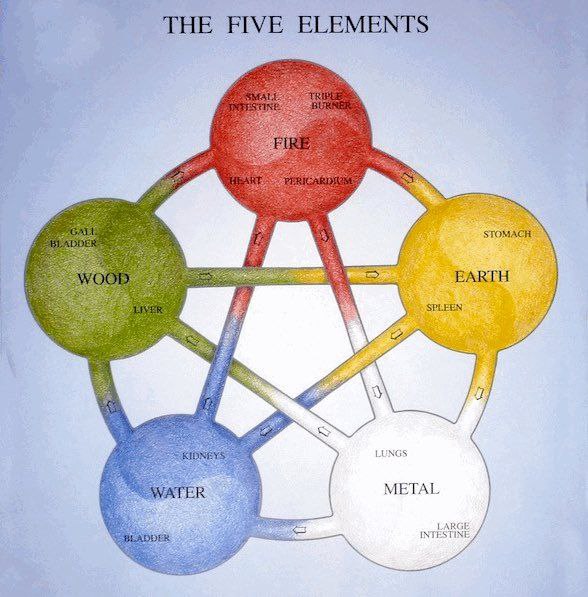
But what about the teeth?
As said earlier, the teeth are seen as a surplus of the bone, and we know from anatomy that they are, in fact, bones. In a way, the Kidneys, bones, and teeth are different words for the same thing. So this passage the author read can be understood as the bone protruding.
And that’s how the author came to that conclusion. After prescribing some herbs to a patient suffering from heel spurs to the point she couldn’t even put her heels on the floor because of the pain, and seeing they didn’t work, he remembered those lines.
Let’s see how it worked out:
Heel spurs and overall bone spurs are also named osteophytes, caused by Calcium leeching out of the bone and depositing on the surface. This can be a clearer example of teeth/bones growing by the day due to marrow-spilling disease.
The confirmation came when he prescribed her to soak her heels in a Baizhu decoction for 20 minutes, three times a day. In a matter of days, the disease regressed and resolved completely in about a month, exemplifying a case of Earth controlling the Water and therefore the marrow and bones.
Being able to use a herbal decoction to successfully treat heel spurs within 30 days is quite the feat when Western medicine relies on shock therapy, painkillers, and other methods that sometimes take more time or aren’t as successful as this one.
This story is a perfect example of the need to use and understand the Chinese Medical language and not give in to skepticism. The ancient doctors knew what they were talking about and recorded their knowledge accordingly.
So, you can now better appreciate the value of maintaining the traditional vernacular used in Chinese Medicine and how understanding it can even take you to places Western Medicine cannot.
While the aim to understand the Chinese medical vernacular is a good thing, attempting to use foreign and Western concepts is like pulling a fish out of the water.
That’s it for now. Do you have any questions? Leave a comment below?
Want me to write about a specific subject? Let me know!
See you in the next post!



0 Comments