Picture this: You wake up with a lingering pain in your jaw, you pay not much attention to it and are sure it will go away. After a while, the pain intensifies and becomes constant. You can still do things but the pain is becoming more and more annoying. Your face begins to swell, and now it is painful to speak, to chew, and open your mouth.
You have what is called a TMJ disorder.
What to do then?
In this article, you are learning how to use Acupressure for TMJ. You will learn how to differentiate the different causes and the points used to solve and treat TMJ disorders at home.
Table of Contents
What is TMJ
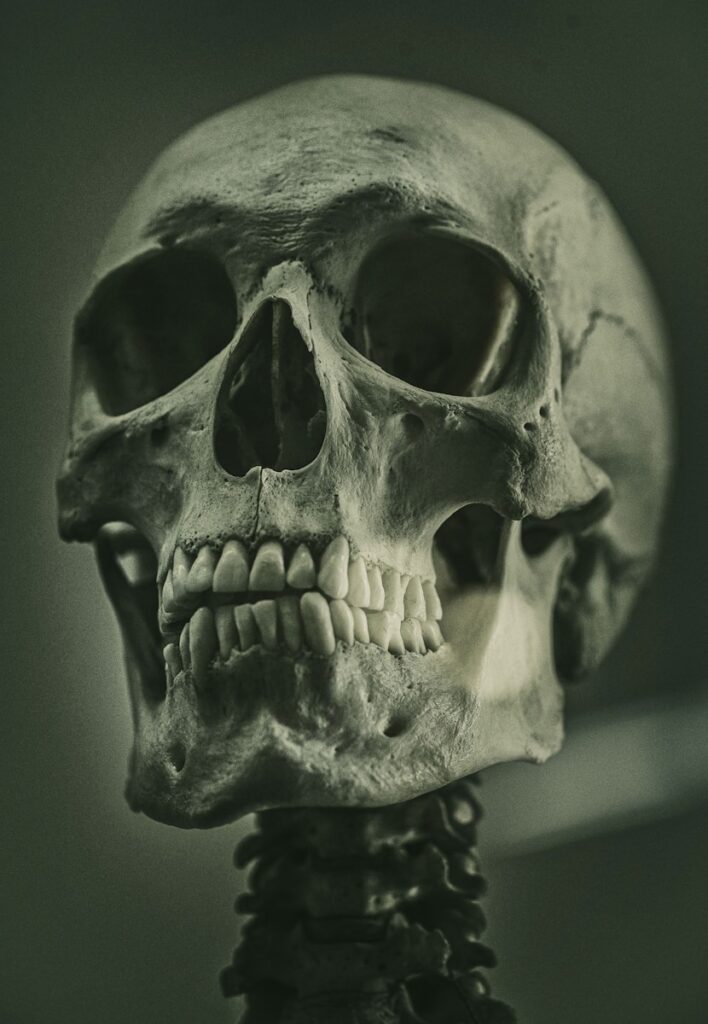
TMJ stands for Temporomandibular Joint, these are the two joints that connect your jaw with your skull and are the combination of muscles, bone, and nerves in charge of opening and closing the mouth, moving your jaw front and back, and sideways. These joints are crucial for daily actions like speaking and biting.
TMJ is also used as a short form of referring to TMJ disorder.
A TMJ disorder is a disease affecting the Temporo-Mandibular joints. It can affect one or both joints at the same time. TMJ disorders are characterized by pain and discomfort, especially when opening the mouth. They can sometimes impede the opening of the mouth and cause severe pain.
Some of the most common causes are bruxism (the involuntary grinding and clenching of your teeth), trauma to the jaw, muscle and fascia issues, degradation of the joint fluid, and nerve problems.
Stress can also cause some sort of TMJ disorder as excessive clenching of the jaw is done when feeling stressed, tense, and anxious.
Now, let’s see what Chinese medicine has to say about TMJ.
How Chinese Medicine Sees TMJ
In the context of Traditional Chinese Medicine, Tmj disorders are characterized based on the Pattern they manifest. Given that not all pains are the same, paying attention to the subtle details of the pain and other characteristics of the pattern you can come up with a proper diagnosis.
According to Chinese Medicine, Tmj disorders can showcase different characteristics pointing to specific patterns. Let’s analyze them:
Internal Factors
Spleen Qi Deficiency/Dampness Buildup
The Spleen is the main organ of digestion in TCM, it works in a dry environment and is easily strained by dietary transgressions and by Dampness. When the Spleen is affected, Dampness starts to build up in the body and begins to disturb the flow of qi through your body. This stagnates your digestion, provokes fluid retention, causes phlegmy throat, and also causes pain.
The clinical features of a Dampness buildup in your TMJ are the presence of a painful lump in the joint, like inflammation, a feeling of fullness in the chest and abdomen, a phlegmy throat, and a thick coating of the tongue.
Sometimes, Dampness comes joined by Heat. A Damp Heat pattern has the same qualities as the aforementioned while adding local warmness to the joint, sweating, and increased heart rate.
Kidney yin deficiency
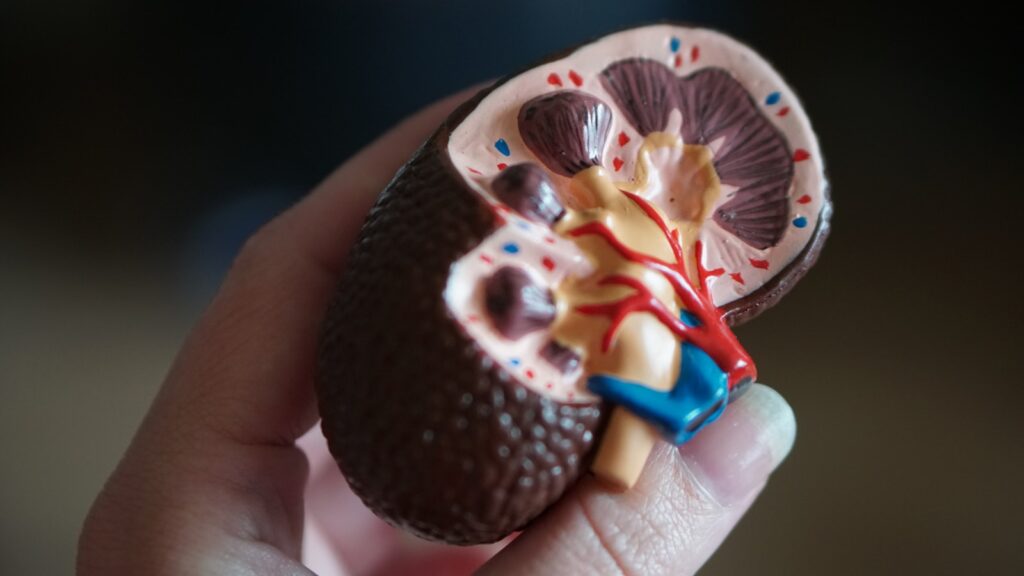
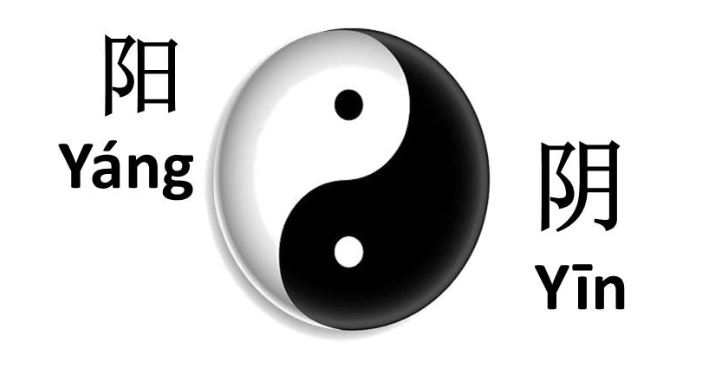
Your kidneys are the organs that store many of the most important vital substances like Essence, being the root of your Yang, and storing the Kidney Yin. Your Yin participates, among other things, in lubricating your body. This includes your joints.
Suffering from a kidney Yin deficiency means the pain is mainly caused by a lack of lubrication in the joints. This leads to painful movements, a clicking sound when moving, and an abnormally stiff jaw.
You can spot a Kidney Yin deficiency if, on top of all the mentioned symptoms, there is also insomnia, night sweats, tinnitus, and a red coating of the tongue.
Liver Qi stagnation
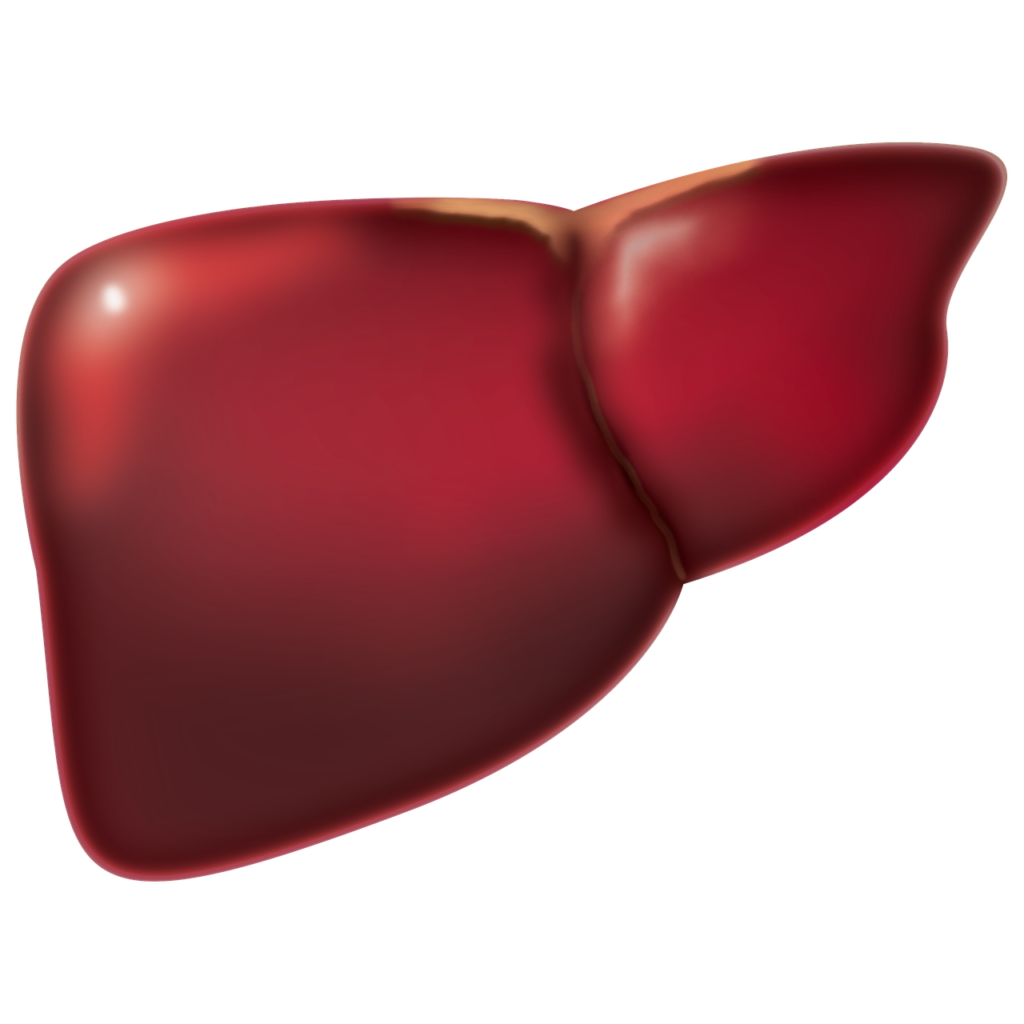
The Liver is the main organ in charge of the skeletal striated muscles and the management of the volume of blood. When the Liver is affected, the smooth flow of Qi and Blood that is normal to the Liver starts to get disturbed and difficult. The Liver is especially affected by emotional strain and stress can easily lead to Liver Qi stagnation.
Liver problems are easily spotted because of the tightness of the muscles, mainly due to the combination of tension caused by stress and the muscle contraction triggered by the Liver.
A TMJ disorder caused by a Liver pattern will reflect irritability, high blood pressure, increased heart rate, tight muscles, and especially clenching of the jaw that wears the joint.
External Factors
These were internal causes of TMJ but the body is also affected by External Pathogenic Factors, so let’s see which ones cause it and how to spot them:
Pathogenic Wind-Heat

Pathogenic Wind is rarely ever seen as a sole aggressor to your body, it is almost always joined by another factor. Wind attacks your body’s protective Qi and weakens it. If your protective Qi (your immune system) cannot withstand the aggression, Wind invades the body and leaves the door open for other factor to invade as well.
In the case of a Wind-Heat pattern, you can find an acute onset pain that switches places, a pulsing pain in the jaw, accompanied by fever and sweating, headaches, thirst, and a red tongue with a scant coating.
Pathogenic Wind-Cold
This is another combination of Wind that usually attacks the upper body. In the case of a Wind-Cold pattern, you will find fever with chills but no sweating, a pain in the jaw that is relieved by heat, a stiff neck, and an aversion to cold environments.
Well, now you know how to differentiate the different patterns of TMJ disorders based on TCM theory. You are halfway there to using Chinese medicine for TMJ, but why use TCM for TMJ you ask?
Let’s find out…
Why Use Chinese Medicine for TMJ
The first and foremost reason to try using Chinese Medicine for TMJ is its holistic approach. Unlike in Western modern medicine, you are not going to treat your jaw pain; you are going to treat the root cause of disease in your body to then give it the tools for self-repair.
TCM not only helps you get rid of the pain but also fixes the underlying cause thus preventing a relapse. But that’s not the only reason, there are many more that will make you want to choose Chinese Medicine for TMJ.
Acupuncture helps reduce stress.

The use of Acupuncture and Acupressure for TMJ helps with relieving and reducing stress levels in your body causing your jaw muscles to relax and loosen. Reducing stress also helps deal with the involuntary and unconscious clenching of the mandible associated with high levels of stress.
Acupuncture points aimed at relaxing your body target the root cause and this leads to relieving the TMJ disorder.
Points like Pericardium 6 and Heart 7 in your wrist although not directly targetting TMJ do help cure TMJ and can be done at home.
Acupuncture triggers the secretion of endorphins.
One of the most widely accepted facts about Acupuncture is the release of endorphins after the needling, which are wonderful for pain management.
Endorphins are your body’s natural painkiller chemicals, they are potent compounds that reduce pain and trigger a relaxation state. This is one of the many reasons Acupuncture is so effective for painful diseases like sciatica and similar.
It is even a discussed hypothesis of how Acupuncture works according to a Western view.
The possibility to do the treatment at home
One clear advantage of Chinese medicine is that you can keep doing the treatment at home as a complement to your main treatment.
For example, with the points you are about to learn you can use Acupressure for TMJ at home and keep improving. Traditional Chinese Medicine is safe to use like that, there is no risk of ‘overdosing’ acupressure. When combined with Acupuncture the results are amazing and the risks are low.
Have you decided to use TCM for TMJ?
Great! Let’s show you the points you will use then.
Acupressure for TMJ

When using Acupressure for TMJ you will focus on two main point groups: Local and Distal points. Local points are located in the surroundings of the disease and are used to specifically target the issue. Distal points on the other hand are used as an aid to treatment, usually focusing on broad problems like pain management.
However, there is a principle in Chinese medicine where you use points away from the problem to specifically solve the issue. For example, you can use a point in your foot to directly cure a headache.
Now let’s see what points to use when using Acupressure for TMJ:
Local Acupressure Points for TMJ
The main local acupressure points for TMJ will be located directly over the Temporomandibular joints. Points Like Gallbladder 2, Sanjiao 21, and Small Intestine 19 are all used to treat pain in the area which includes TMJ.
Other points like Gallbladder 20 and Conception Vessel 24 are used as both painkillers and stress relievers.
Let’s locate them:
Sanjiao 21/Triple Burner 21
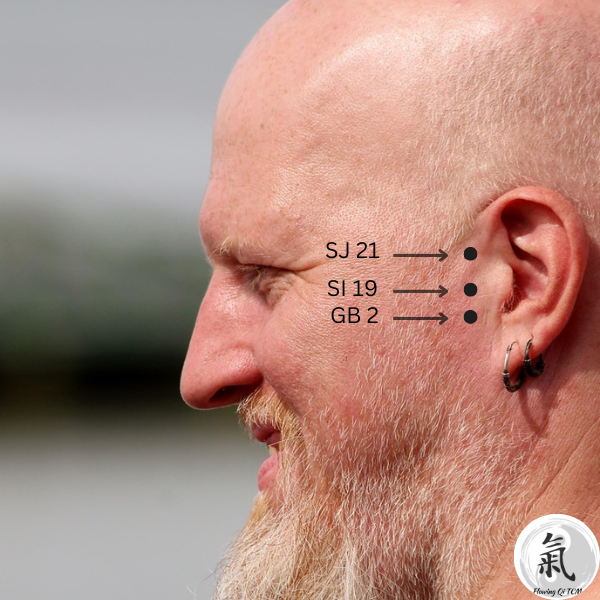
This point is located exactly between your ear and your TMJ, superior to the supratragic notch and the condyloid process of the mandible.
To find it, run your fingers through your jaw until you find the tragus of your ear, go to the notch located upwards and slightly open your mouth. You will feel a depression formed in that space, that’s the Sanjiao 21 point.
Gallbladder 2
Also located between your ear and the TMJ, you can find this point following the same instructions as the previous point. Run your finger upwards through your jaw looking for your ear, and find the first notch below the ear tragus.
Open your mouth and feel a depression form in that spot.
There is the Gallbladder 2 point.
Small Intestine 19
This point completes the trifecta of points directly located between your ear and the joint. You can find it easily by finding the midpoint between the previous two points.
Find the tragus of the ear, look for its middle point, and open your mouth, Small Intestine 19 is located in that depression.
One quick way to stimulate these three points is to look for one of them, opening your mouth and then massaging all of the area up and down therefore targeting all three points at once.
You can do this for 3 minutes or press each point firmly for 1 minute and release for 30 seconds.
Stomach 5, 6 and 7
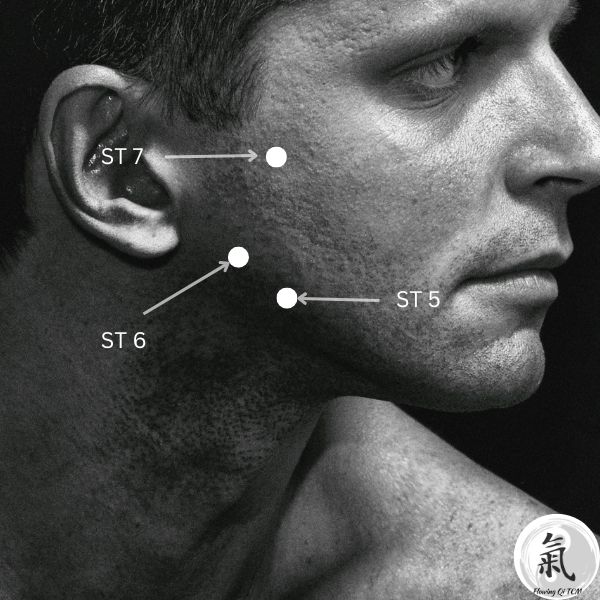
These three points are located along the jawbone and are used to treat painful conditions of the jaw.
Stomach 5 is located on the lower edge of the jaw, in front of the anterior edge of the masseter muscle. Clench your mouth and feel the muscle contract, Stomach 5 is located just at the end of the muscle, close to the facial artery.
Stomach 6 is located on the masseter muscle, 1 cun diagonally away from the lower angle of the mandible.
Stomach 7 is located upwards from Stomach 6, 1 cun frontal to the chondyloid process of the mandible. Look for your zygomatic bone (your cheekbone) and look for a depression formed when moving forward.
Conception Vessel 24
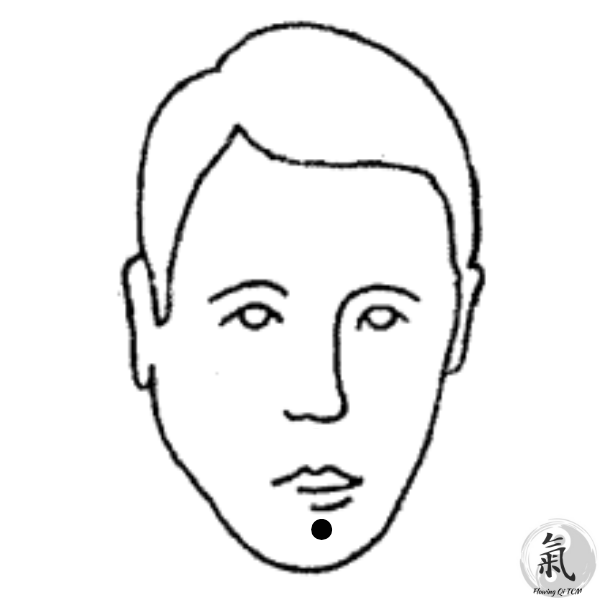
This point is located below the center of the lower lip, right in the midline in the center of the mentolabial groove.
All of these points can be stimulated by firmly massaging them for 3 minutes at a time or by pressing them for one minute and then releasing them. Choose the three first points and add one to two others in your head.
Then, use the Distal points for even more results when using Acupressure for TMJ.
Distal Acupressure Points for TMJ
The Distal Acupressure points are located away from the place of disease but also help with curing the issue. In this case, you will learn points with painkilling characteristics.
Gallbladder 20

Gallbladder 20 is located in the back of your head in the nape. Look for the occipital bone and the occipital protuberance. Then, look for the hollow space between the trapezius muscle and the sternocleidomastoideus.
One quick way to find it is to turn your head sideways and feel the sternocleidomastoideus muscle contract, then follow its path towards your head and find a hollow space behind the point where the muscle finds the head.
Large Intestine 4

Large Intestine 4 is the go-to Acupoint for all sorts of pain in the upper body. Located on your hand, midway through your first metacarpal bone.
Find your index knuckle and draw a line connecting it with your wrist. Large intestine 4 is located in the middle point of the line.
Bladder 60

This point is a must-know for anyone who is trying to get rid of pain. This point is a potent painkiller that works for any part of the body.
You can find it behind your outer ankle, in the depression between the ankle and the Achilles tendon.
Follow the same guidelines as with the previous points to stimulate these points.
Final remarks
Choosing to use Acupressure for TMJ disorders is a great choice if you want to get the most out of what Chinese Medicine has to offer. Be consistent and choose 4 to 5 points each time for better results and you should be seeing results in no time.
Don’t forget to share this with your family and leave a comment below.
See you in the next post!



1 Comment
tlover tonet · August 21, 2025 at 7:07 am
I have been checking out some of your articles and i can state pretty nice stuff. I will make sure to bookmark your site.